Whether you manage offices, retail premises, healthcare facilities, or industrial environments, air conditioning is increasingly integral to your daily operations.
When it breaks down, it can quickly lead to uncomfortable working conditions, operational disruptions, and costly repairs.
An air conditioning maintenance contract helps keep systems efficient, compliant, and reliable throughout the year, while giving you valuable peace of mind.
Of course, not all contracts are the same, and it’s important to understand what’s included, what’s excluded, and how pricing works.
Why have an air conditioning maintenance contract?
Improved reliability and reduced breakdowns
Regular maintenance helps identify issues before they become serious faults, reducing the likelihood of system failures during periods of peak demand.
Greater energy efficiency
Dirty filters, low refrigerant levels, and poorly maintained components can significantly increase energy consumption as well as the risk of breakdowns.
Routine servicing keeps systems operating efficiently and can help reduce overall running costs.
Compliance and legal obligations
Businesses have responsibilities under F-Gas regulations, health and safety legislation, and energy efficiency requirements to ensure systems are properly maintained.
Longer equipment lifespan
Preventative maintenance reduces wear on critical components, helping systems last longer and delaying the need for potentially expensive replacements.
Faster emergency support
Many maintenance agreements give you priority when it comes to breakdown response, as well as access to dedicated engineering support and advice.
For businesses operating in critical cooling environments, a planned air conditioning maintenance contract gives you predictable costs and added peace of mind.
Reactive vs planned preventative maintenance
There are two main contract options, each of which operate slightly differently:
Reactive maintenance contracts
Offer emergency call-out support, but are less likely to include routine servicing.
This is a potentially cheaper option upfront, but can lead to:
- Increased downtime
- Higher repair costs
- Reduced system efficiency
- Shorter equipment lifespan
Planned Preventative Maintenance (PPM)
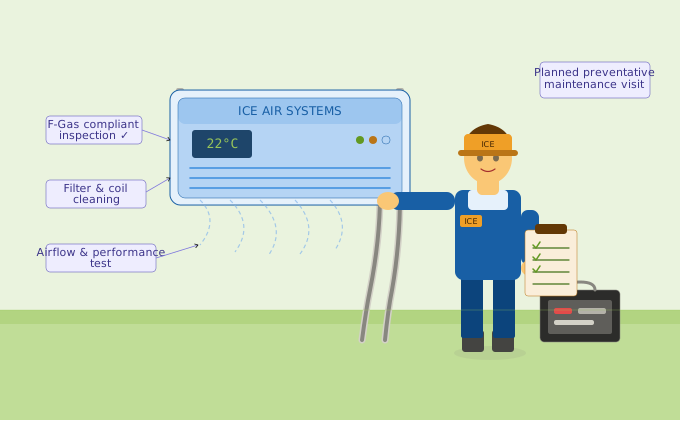
PPM contracts aim to prevent issues before they happen through scheduled servicing and inspections.
Typical benefits include:
- Reduced breakdown risk
- Improved efficiency
- Better compliance support
- Longer system life
- Lower long-term operating costs
In most commercial cases, planned preventative maintenance is likely to be the best option.
How ICE’s Maintenance Contracts Work
At ICE, we offer tailored air conditioning maintenance contracts that meet the needs of businesses across a wide range of sectors.
These are designed around the size of the system, its operating hours, and the environment in which it is installed.
Depending on requirements, contracts can include:
- Scheduled preventative maintenance visits
- Priority breakdown response
- 24/7 emergency call-out support
- F-Gas leak inspections and reporting
- System performance checks
- Refrigerant monitoring
- Filter cleaning and coil inspections
- Detailed service documentation
Where required, ICE can also support businesses with air conditioning energy assessments to help improve efficiency and ensure compliance with TM44 requirements.
What’s typically included in an air conditioning maintenance contract?
Although contracts vary between providers, most commercial agreements will include a combination of preventative servicing and reactive support when needed.
This will typically include:
- Scheduled maintenance visits
- Cleaning of filters and coils
- Refrigerant and pressure checks
- Electrical inspections
- Drain and condensate checks
- System performance testing
- F-Gas compliance checks
- Maintenance reports and recommendations
Businesses should also check for exclusions within the contract, such as:
- Replacement parts
- Refrigerant gas costs
- Out-of-hours labour
- Major repairs
- Equipment upgrades
Understanding what is, and isn’t, included in a contract is essential if you are to avoid any unexpected costs later.
For businesses needing urgent support outside of planned maintenance, ICE also provides dedicated service and repairs support.
How are maintenance contract costs calculated?
The cost of an air conditioning maintenance contract will depend on several factors, including:
- Number of systems and indoor units
- Type of equipment (split, VRF, chiller, etc.)
- System age and condition
- Accessibility of equipment
- Operating hours and usage levels
- Required response times
- Whether parts and labour are included
In most cases, repeated reactive breakdowns will work out more costly than regular preventative maintenance.
Air conditioning maintenance contract FAQs
Do I need a maintenance contract by law?
While maintenance contracts themselves are not legally mandatory, businesses are responsible for maintaining systems safely and complying with F-Gas and energy efficiency regulations.
What does planned preventative maintenance include?
Typically, it will include cleaning, inspections, refrigerant checks, electrical testing, performance monitoring, and compliance reporting.
How much does an AC maintenance contract cost?
Costs can vary depending on the size of the system, complexity of the premises and installation, and level of coverage required. Planned maintenance is likely to be more cost-effective over time than emergency-only support.
Looking for the right air conditioning maintenance contract?
At ICE, we support businesses with reliable servicing, repairs, and preventative maintenance that’s tailored to their unique operational needs.
Whatever level of cover and support you’re looking for, our team can recommend the right air conditioning maintenance contract for your building and budget.
Ask us about our different contract options today.
You may also like...
What is a TM44 inspection?
So what is a TM44 Inspection? Well, today we are going to go over everything that you need to know....
Read More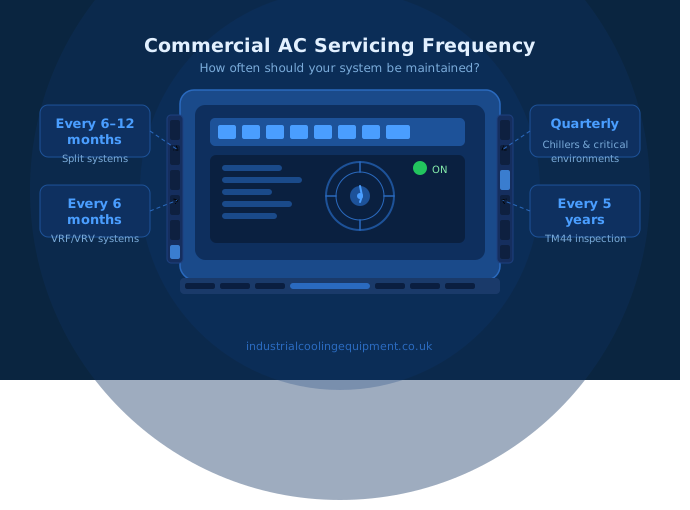
How often should commercial air conditioning be serviced?
Commercial air conditioning plays an integral role maintaining a comfortable, productive, and compliant working environment. Even though many businesses depend...
Read More
What is a TM44 inspection and does your building need one?
If you have air conditioning in your commercial building, there’s a good chance your system will require a TM44 inspection. ...
Read More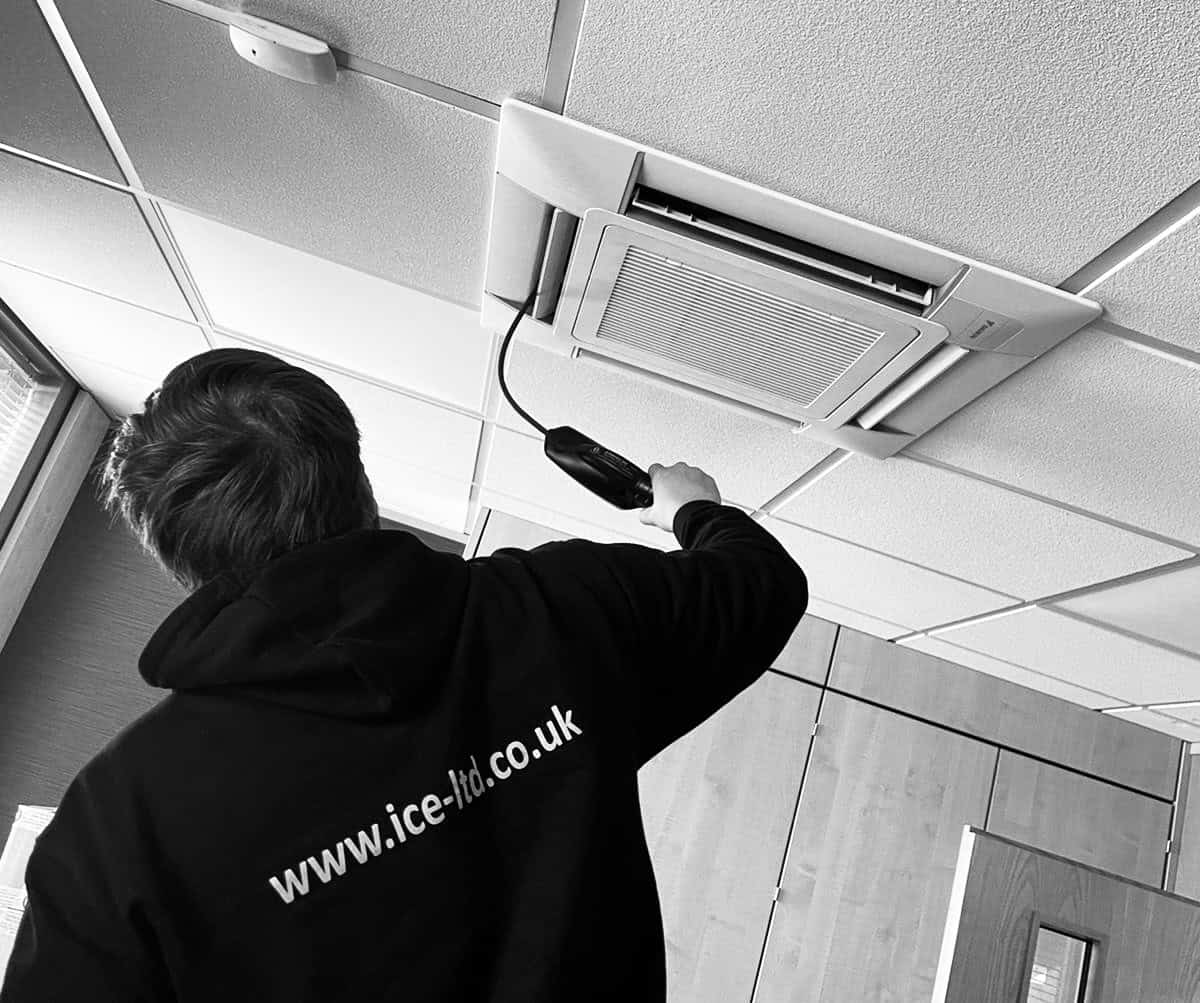
How Much Does Air Conditioning Maintenance Cost?
“How much should air conditioning maintenance actually cost?” It’s a fair question, but also one that’s surprisingly difficult to answer...
Read More
Best Air Conditioning Brand UK (2026 Guide)
What Is the Best Air Conditioning Brand in the UK? (2026 Guide)? If you’ve landed on this page, you’re probably...
Read More