Does A/C heat?
This is one of the most common questions we hear at Industrial Cooling Equipment Ltd, especially from facilities managers and office managers planning new heating systems. Many people still believe air conditioning is only designed for cooling, but that couldn’t be further from the truth.
In the UK, air conditioning is often used more for heating than cooling, particularly in commercial buildings. Modern A/C systems are actually highly efficient heat pumps, capable of providing reliable, cost-effective heating for offices and homes all year round.
In this article, we explain how air conditioning produces heat, whether A/C can heat your office or home, and why so many businesses are replacing traditional gas heating with air conditioning systems.
How Does A/C Heat Work?
Modern air conditioning systems are reverse cycle heat pumps, not simple cooling units. Cooling-only systems are now very rare in the comfort cooling market.
When an A/C system is cooling, it removes heat from the indoor air and expels it outside. When it switches to heating mode, the process is reversed. The system extracts heat from the outdoor air and transfers it indoors.
Even when outdoor temperatures feel extremely cold, there is still usable heat in the air. This is why air conditioning remains effective during UK winters. You may notice outdoor units icing up in low temperatures – this is completely normal and shows the system is actively pulling heat from the air.
Because air conditioning moves heat rather than generating it, it is far more energy efficient than gas boilers or electric heaters.
Does A/C Heat Your Office Effectively?
Yes, and for many modern buildings, it already does. Air conditioning is now the primary heating source in most new and refurbished offices.
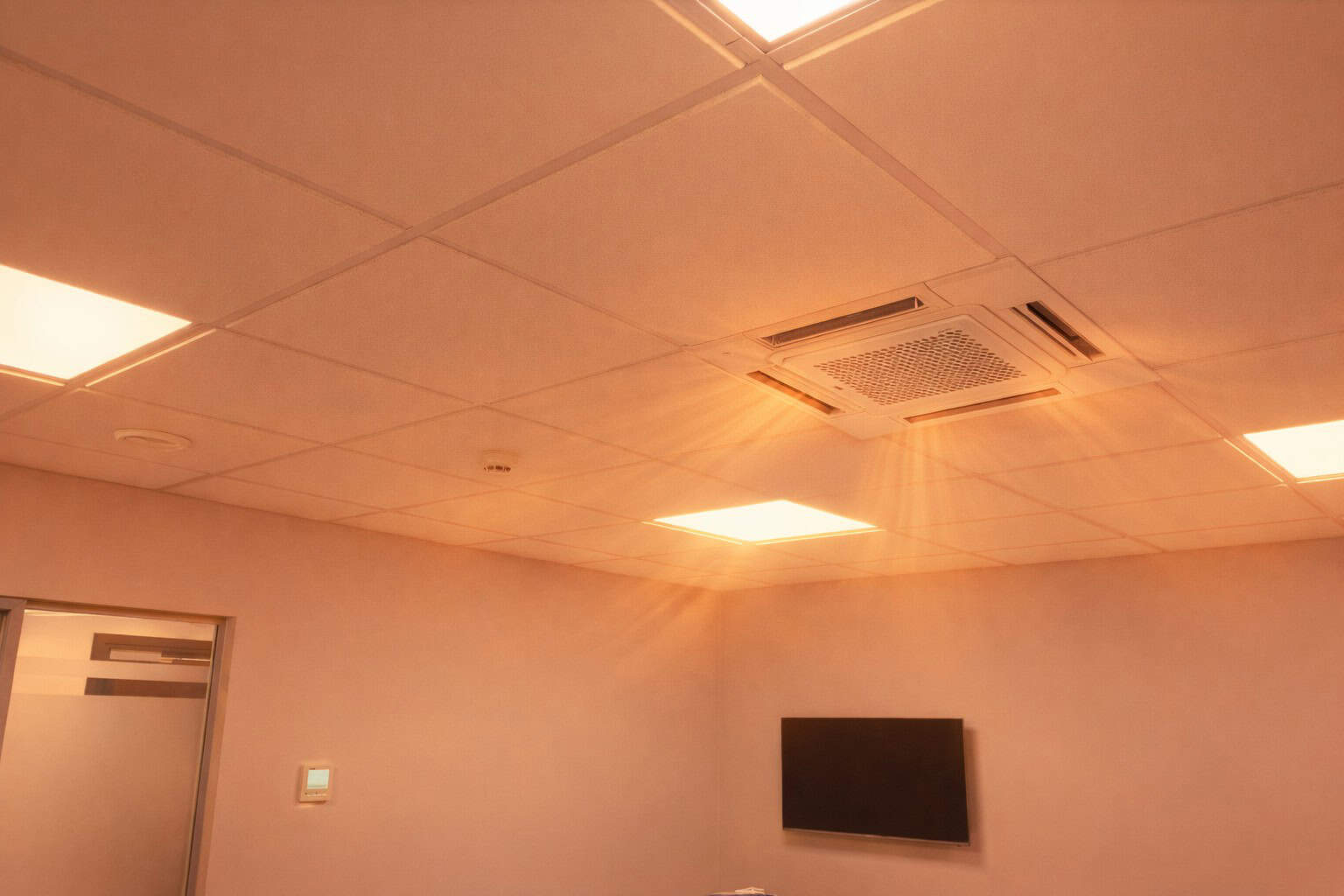
Office A/C heating is typically delivered using ceiling cassette units, ducted systems hidden above suspended ceilings, or wall-mounted units in smaller spaces. These systems distribute warm air evenly and maintain precise temperature control across different zones.
Offices may use:
- Split, twin, triple or quad systems for single areas
- Multi-split systems serving several rooms
- VRF (Variable Refrigerant Flow) systems for large buildings with lots of indoor units serving various spaces, rooms and floors
Why Offices Choose A/C over Gas Boilers
One of the biggest advantages of A/C heating is efficiency. A modern A+++ rated system can produce over 5 kWh of heat from just 1 kWh of electricity. Even standard A–A++ office systems typically achieve SCOP values between 3.6 and 4.2, which is still significantly more efficient than gas heating.
In comparison, a 90% efficient gas boiler produces only 0.9 kWh of heat per kWh of gas. Despite electricity costing more per unit, air conditioning often results in lower overall heating bills.
A/C systems also improve indoor air quality by filtering air as it circulates, provide heating and cooling from one system, and allow zoning so unused areas are not heated unnecessarily.
Seasonal Efficiency Explained (SCOP & SEER)
To measure real-world efficiency, manufacturers now use seasonal performance ratings.
SCOP (Seasonal Coefficient of Performance) measures heating efficiency across the year, while SEER measures cooling efficiency. These ratings are required under the EU Energy Related Products Directive and give a far more accurate view of annual energy use.
The higher the SCOP, the more efficient the heating system.
Are There Any Downsides to A/C Heating?
Air conditioning heating does have some limitations. Gas boilers can deliver radiant heat faster in extremely cold conditions, while heat pumps may take 10–15 minutes to reach peak output due to defrost cycles.
Warm air systems can also create drafts if poorly designed. This is why correct system sizing and professional installation are essential.
Does A/C Heat Your Home?
Domestic air conditioning is becoming increasingly popular across the UK, particularly since the rise of home working. Many homeowners now install A/C units in bedrooms, conservatories, home offices and garden rooms.
Most domestic systems are installed alongside gas boilers, providing fast, efficient heating in frequently used rooms without running the entire house heating system. Using air to air heat pump A/C as the sole heating source is possible, though still less common due to installation costs and the additional requirements for hot water within the home.
Since 2022, domestic A/C installations benefit from 0% VAT, making them far more affordable. With gas heating being phased out by 2050 and already banned in many new-build homes, heat pump technology is clearly the future.
So, Does A/C Heat?
Yes. A/C heats homes and offices efficiently, reliably, and cost-effectively. For commercial buildings, air conditioning is often the most flexible and future-proof heating solution available. For homes, it offers targeted comfort and long-term savings while supporting the UK’s net-zero goals.
You may also like...

How Long Does It Take to Install Air Conditioning?
If you’re considering air conditioning for an office or commercial building, one of the first questions you’ll ask is…. How Long...
Read More