The Problem
A plastics manufacturer in Liverpool runs production 24 hours a day, and its process cooling has to run with it. The site relies on two Industrial Frigo process chillers, including a large four-circuit unit, and two dry coolers, holding 115.8 kg of R134a refrigerant between them.
With a process that never stops, the client needed a chiller PPM (planned preventive maintenance) contract that does more than tick boxes. They had not been happy with their previous maintenance contractor, and when ICE took over the contract, the condition of the plant showed why. Our engineers found:
- A refrigerant circuit out of action: one of the four circuits on the main chiller had stopped. Its compressors were drawing no current and both pressures read zero, because a refrigerant leak had emptied it of its entire charge.
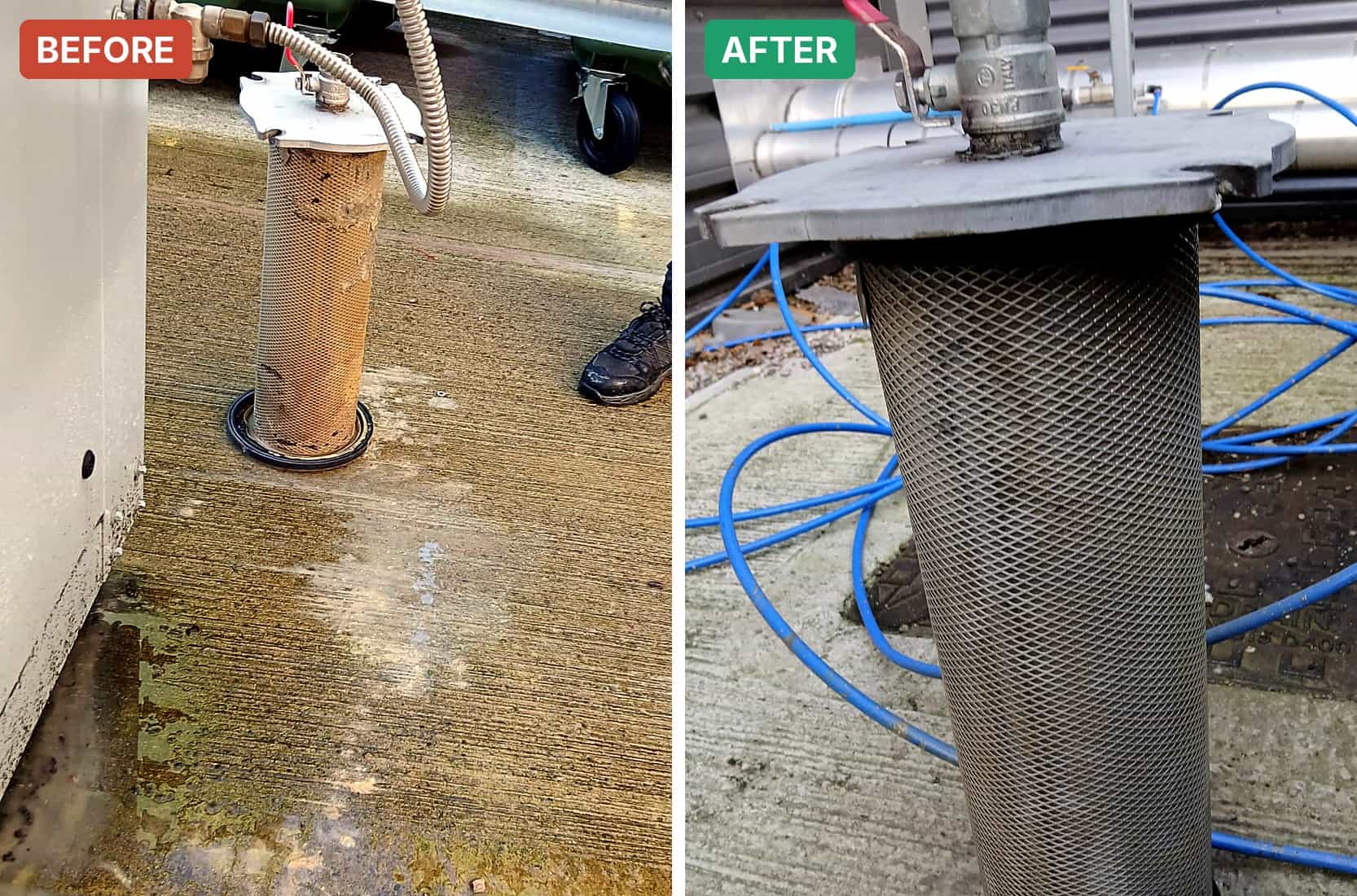
- Heavily fouled water strainers: strainer baskets clogged with sludge and debris, which restricts water flow through the chillers and dry coolers.
- Sludge in the water system: deposits building up inside the strainer housings, a clear sign the system water needed attention.
- Small faults left unresolved: faulty water pressure gauges, an isolation valve that could not fully isolate the main chiller’s strainer, and a missing cap on a discharge service valve.
The stopped circuit was the biggest risk. On a multi-circuit chiller, the remaining circuits keep the water cool, so production carries on and nothing on site flags the fault. The chiller was running with no spare capacity, leaving the 24/7 process exposed if a second circuit failed.
The Solution
ICE now maintains the site’s cooling plant under a chiller PPM contract. Every visit follows the same thorough process, carried out by F-Gas certified engineers, so nothing is left to chance.
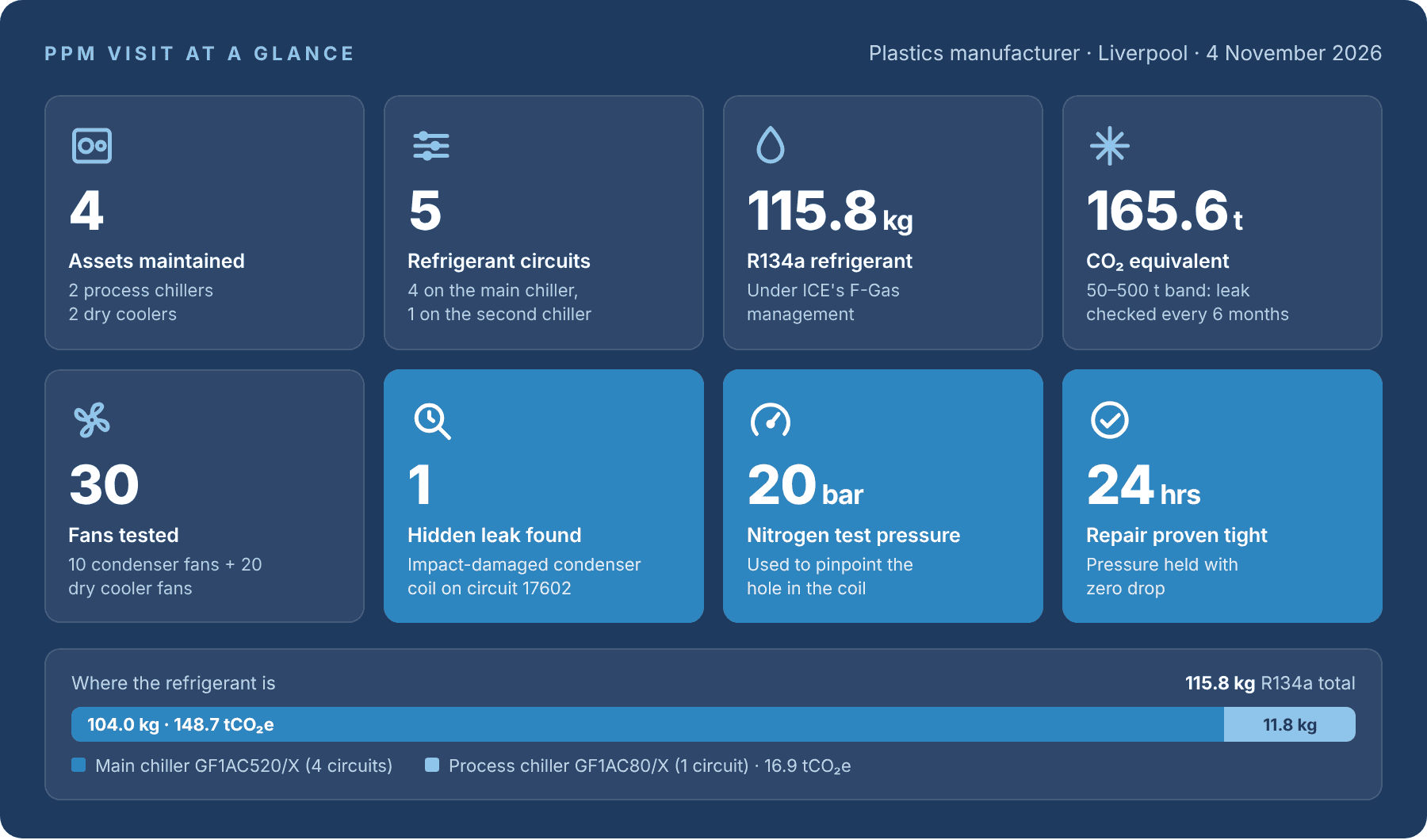
What our chiller PPM visit covers
- Every refrigerant circuit checked: compressor currents, suction and discharge pressures, oil levels, vibration and an electronic leak check.
- Water side and performance: flow and return temperatures, condenser fan and pump currents, and strainers cleared.
- Electrics and controls: electrical connections and controls checked.
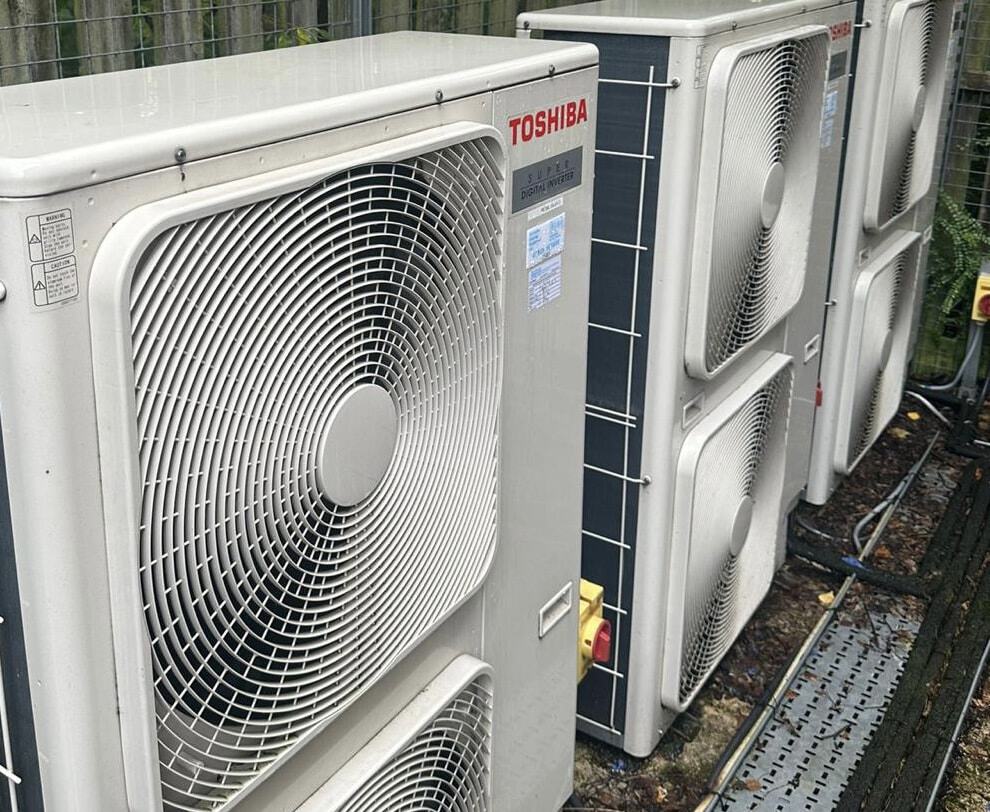
- Dry coolers: fans, motors, bearings, pumps, water distribution and controls tested, with every fan on the 16-fan unit checked individually across its variable frequency drive.
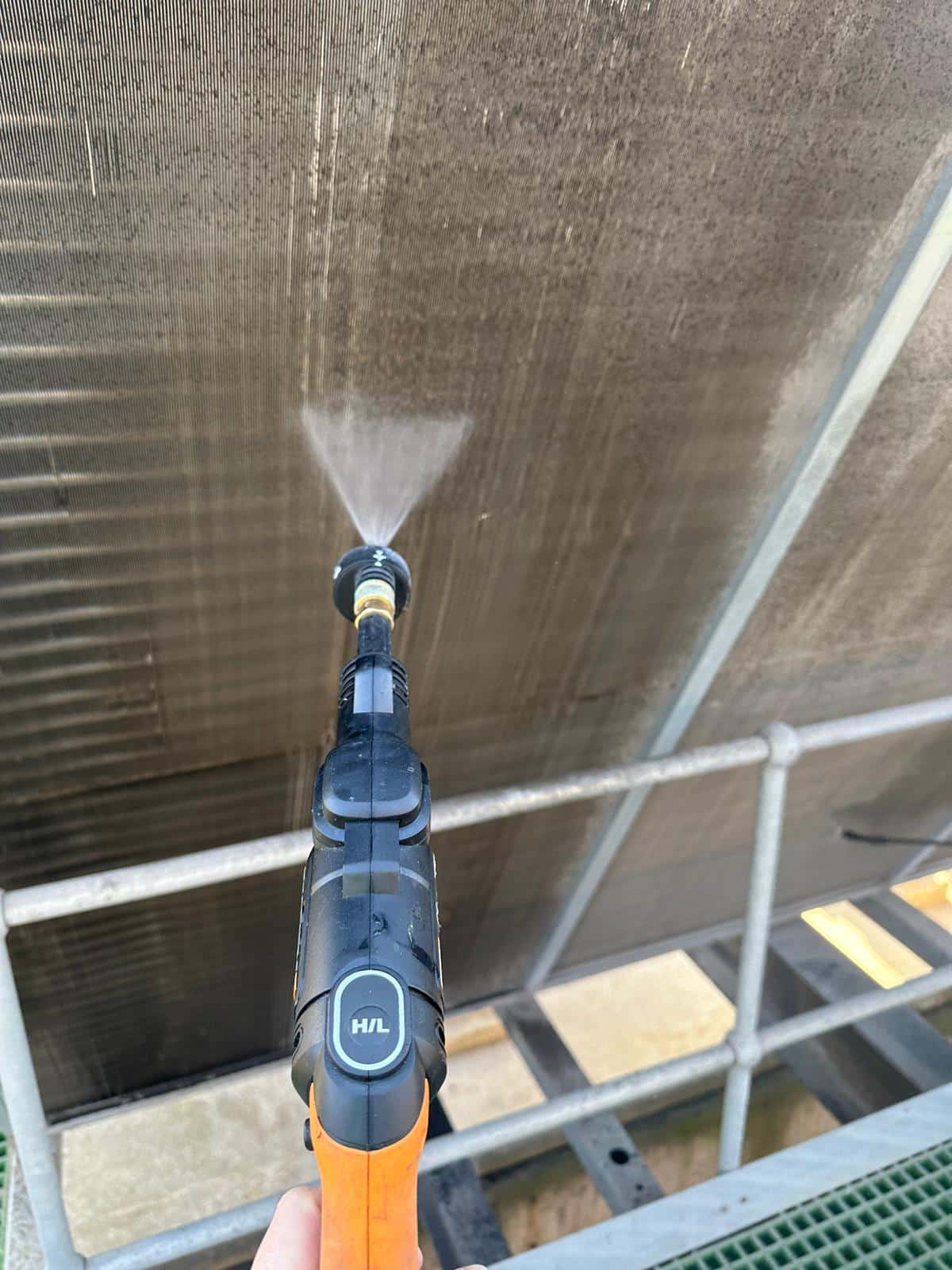
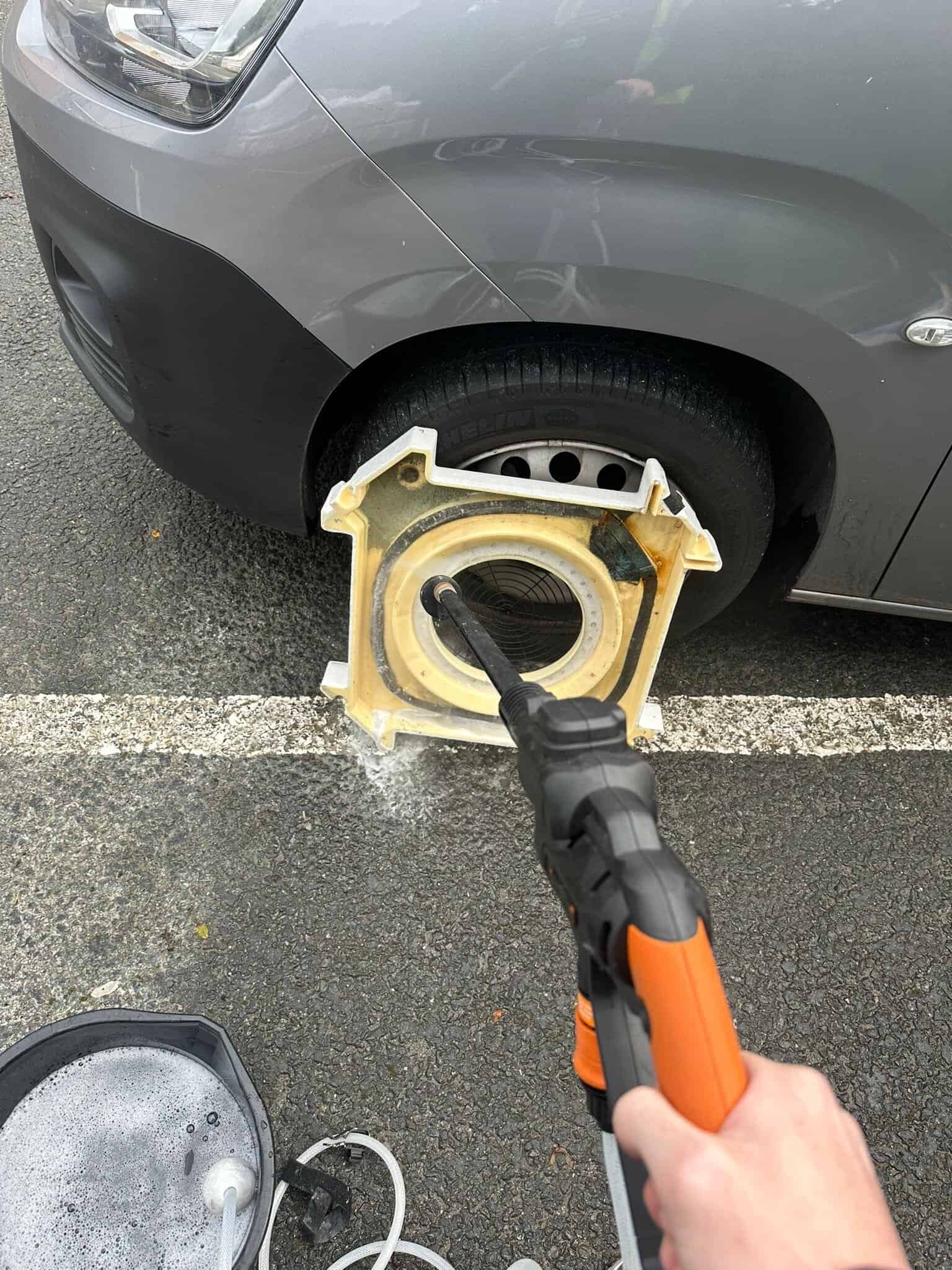
- Cleaning: condensers and casings cleaned to keep heat rejection efficient.
- Condition scoring: every operating circuit rated, so issues are tracked from one visit to the next.
PPM HIGHLIGHT
What the PPM uncovered: a hidden refrigerant leak
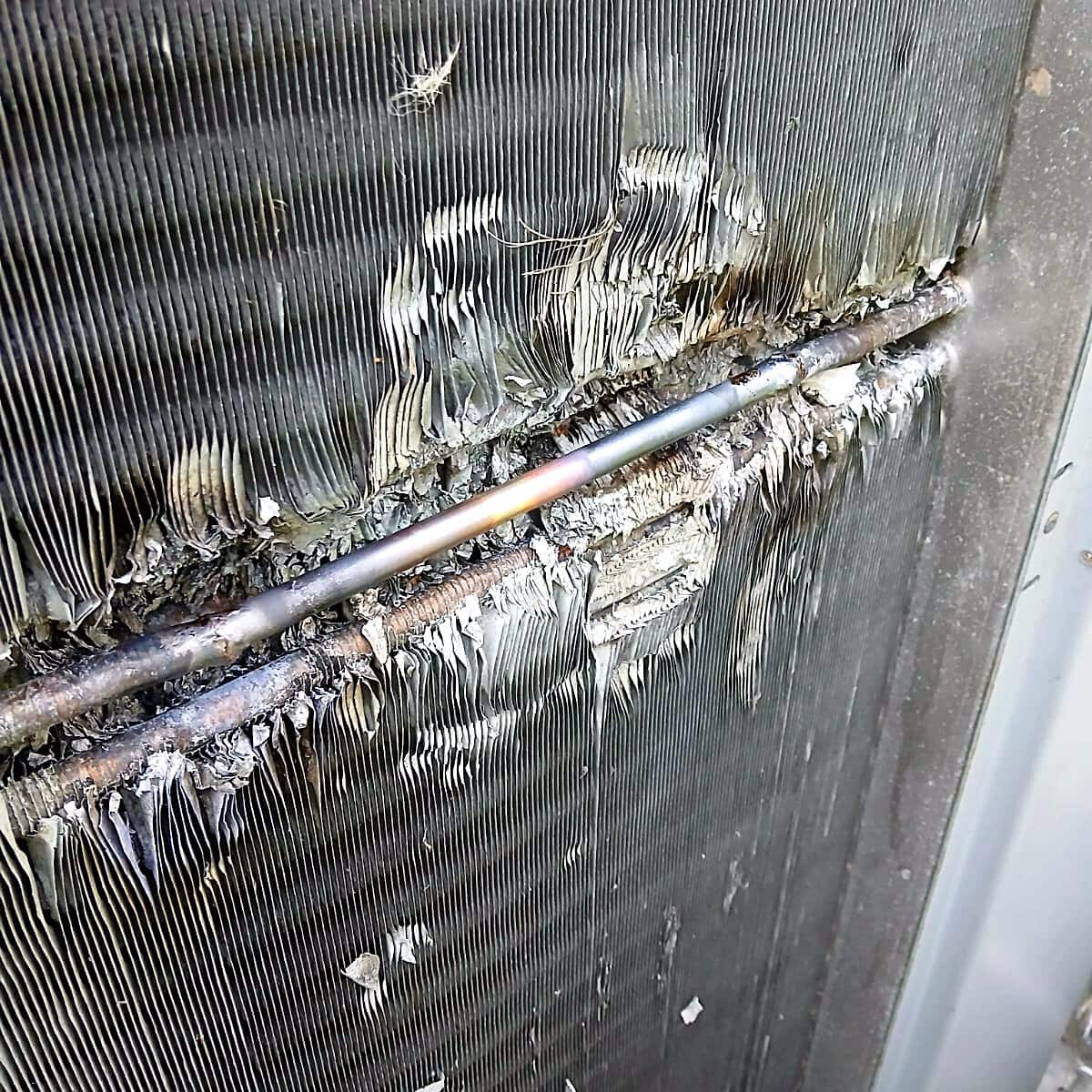
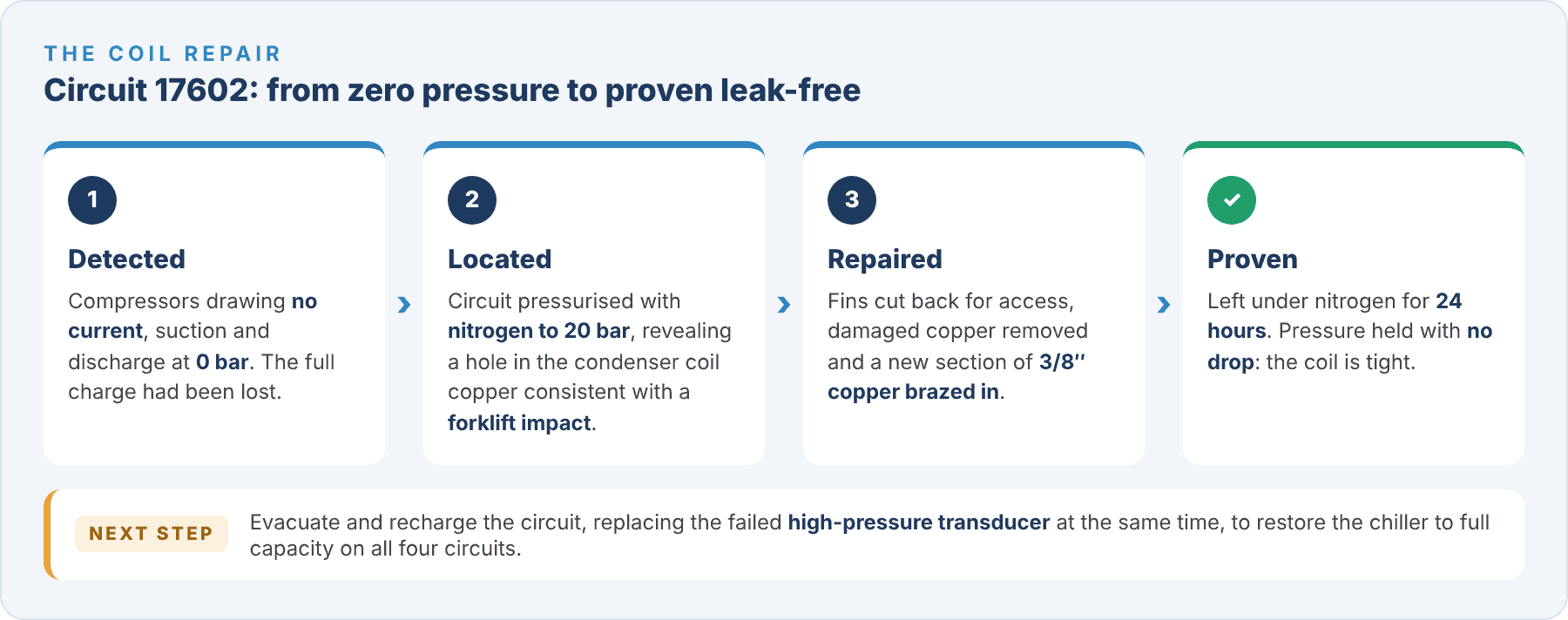
One of the four circuits on the main chiller had stopped. Its compressors were drawing no current and both pressures read zero: a refrigerant leak had emptied it of its entire charge. With the other three circuits still holding the water temperature, nothing on site had flagged it.
With the circuit completely empty, there was nothing for an electronic leak detector to pick up. Rather than leaving the fault for a later visit, our engineer stayed on site to trace and repair it:
- Found: the circuit was pressurised with oxygen-free nitrogen to 20 bar, revealing a hole in the condenser coil pipework caused by a forklift impact.
- Repaired: the aluminium fins were cut back, the damaged copper removed and a new section of 3/8″ pipe brazed in.
- Proven: the circuit held nitrogen pressure for 24 hours with no drop.
- A new coil avoided: a replacement condenser coil for a chiller this size would cost in excess of £10,000. A proven local repair kept the original coil in service.
- Next step: a failed high-pressure transducer was identified, so it can be replaced when the circuit is recharged.
For a step-by-step look at how this kind of repair is carried out, read our guide to chiller leak repair.
Cleaning up the water side
The water strainers were drained, removed and cleaned, clearing out the sludge and debris that had built up in the baskets and housings.
Water sampling and laboratory analysis
The sludge pointed to a wider water quality problem, so rather than guess, our engineers took samples of the system water for laboratory analysis. The results give an accurate picture of the water’s condition and form the basis of our water treatment recommendations, protecting the heat exchangers, pumps and pipework for the long term.
The Outcome
Because the PPM visit was thorough, faults that could have sat unnoticed were found and dealt with. The client now has:
- A hidden fault caught early: the leak was found and repaired before a second circuit failure could put production at risk.
- A proven repair: a leak-free circuit, with only the evacuation and recharge left to complete.
- Healthy running plant: every operating circuit passed its F-Gas leak check with no fault codes and was rated Good, with chilled water leaving the main chiller at 10°C.
- Clean strainers: the fouled strainers were drained, cleared and cleaned.
- Full F-Gas compliance: with 165.6 tonnes CO2 equivalent on site, the chillers need a leak check every six months. The client received a digital report for every asset, a leak test certificate and an updated refrigerant asset register.
A full report and a clear plan going forward
The client received a full report covering the condition of every asset, the laboratory water analysis and our recommendations for water treatment and ongoing maintenance, including:
- Evacuating and recharging the repaired circuit, replacing its failed high-pressure transducer at the same time.
- Fitting a replacement cap to the discharge service valve on circuit 17601.
- Replacing faulty water pressure gauges on the chiller and dry cooler pipework.
- Repairing the isolation valve so the main chiller’s strainer can be fully isolated and cleaned.
- Reviewing frost protection in the chilled water system ahead of winter.
- Fitting impact protection around the chiller to prevent future vehicle damage.
Why a thorough chiller PPM matters
Under UK F-Gas rules, a refrigerant leak found during a check must be repaired as soon as possible, and the system checked again within a month to confirm the repair has worked. A PPM that only ticks boxes can miss a stopped circuit entirely. A thorough one finds it, and gives you the records to prove your plant is compliant.
ICE provides chiller PPM contracts for manufacturers across Liverpool, Merseyside and the North West from our base in Runcorn. If you are not confident your current contractor is telling you the true condition of your plant, call us on 01928 568800.
Chiller PPM FAQs
What does a chiller PPM visit include?
A good chiller PPM covers the refrigerant side (pressures, compressor currents, oil and leak checks), the water side (temperatures, flow, pumps and strainers), the electrics and controls, and cleaning of condensers. Each visit should end with a written report on the condition of every asset.
How often should a process chiller be serviced?
It depends on how hard the chiller works and how critical it is. F-Gas law sets the minimum leak check frequency, but a chiller serving a 24/7 process usually needs more regular attention than the legal minimum to stay reliable.
How often does a chiller need an F-Gas leak check?
It depends on the size of the refrigerant charge, measured in tonnes of CO2 equivalent. Systems holding 5 to 50 tonnes need checking every 12 months, 50 to 500 tonnes every 6 months, and 500 tonnes or more every 3 months. Fitting a leak detection system halves the frequency, and it is a legal requirement at 500 tonnes and above.